Upside-Down Youth — Part 2
New York, I Love You, But You're Bringing Me Down: The Dual Masks of the Young Generation
Keywords: Burnout, Dual Identity, Self-Worth
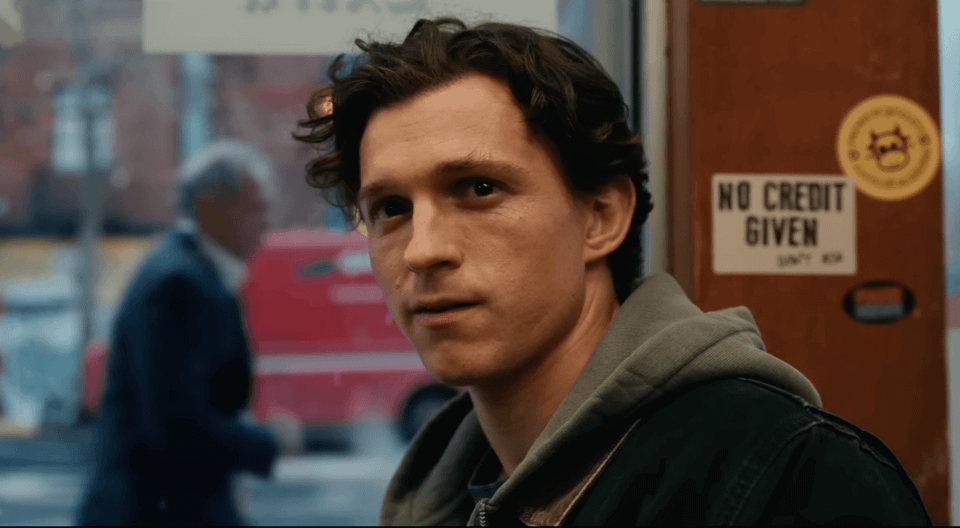
Continuing the faintly sorrowful melody of "New York, I Love You But You're Bringing Me Down," Peter Parker sits secretly in a cafe, observing his friends Ned and MJ. Behind him is a sticker that reads "No Credit Given." (In the context of a cafe, this means no running a tab, but symbolically, it perfectly reflects a state of not being recognized or acknowledged).
Spider-Man has just been awarded the "Key to the City" by the municipal government. On the surface, this is the pinnacle of a superhero's glory. But Peter Parker lives completely alone in a cheap apartment—unknown and uncared for.
The "Dual Suits" of Today's Young Generation
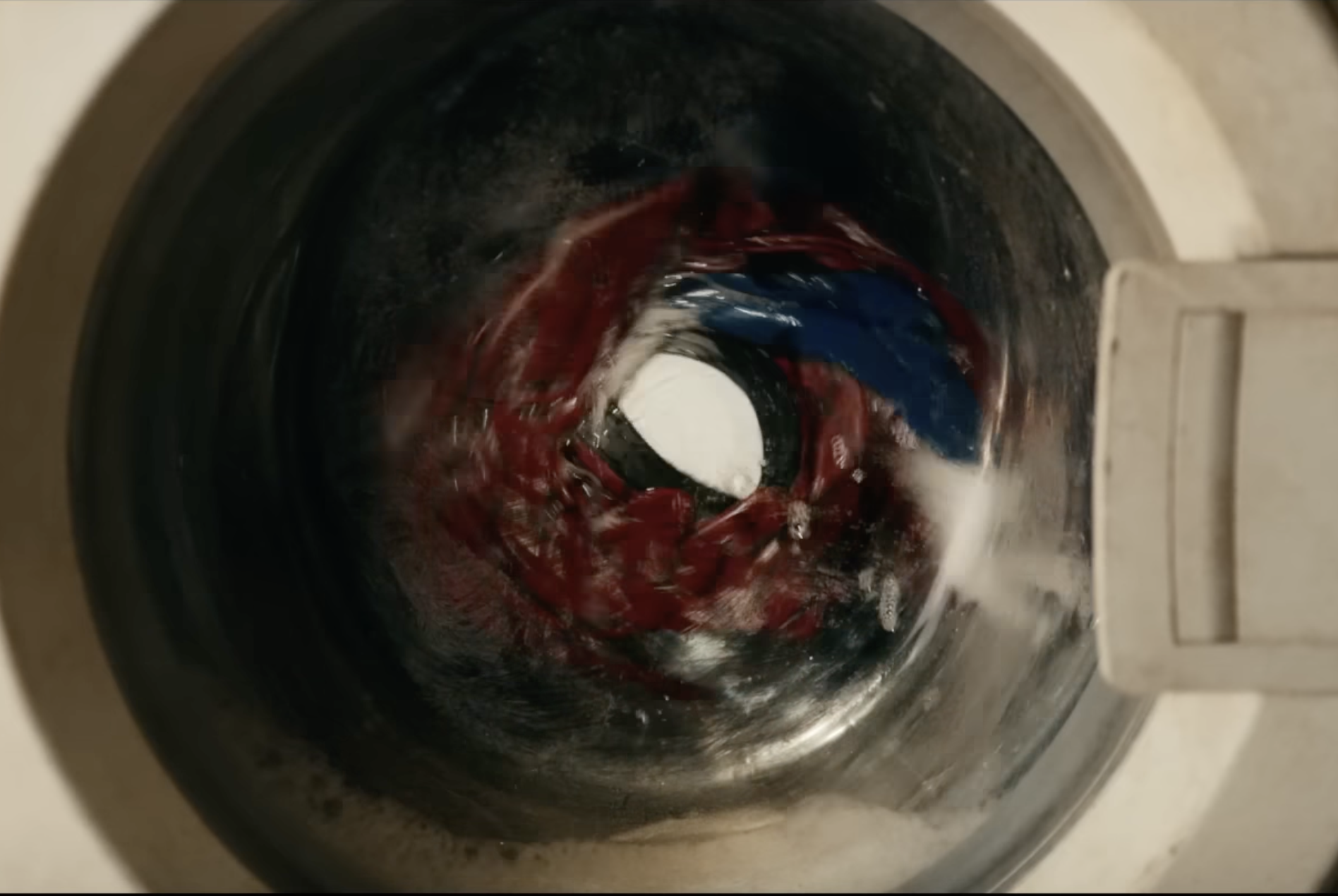
This extreme sense of fragmentation accurately reflects the reality of many young people today. Just like Peter, they put on the battle suit of a "dual identity" every single day.
On one hand, they must satisfy massive external expectations: being a good student at school, a dedicated employee at work, and maintaining a sunny, positive, and likable "persona" on social media. Every carefully curated post, every perfectly angled photo, and every calculated social response is a "Spider-Man suit" they have meticulously woven—a protective shield needed to survive in society.
But on the other hand, the "Peter Parker" hidden beneath that suit is often filled with vulnerability and confusion. The authentic self that longs to be loved unconditionally is frequently deeply suppressed.
Young people constantly overextend themselves to meet society's standards. They strive desperately in their respective fields, yet frequently feel their true worth remains unseen.
Just like Peter: saving the entire world, but nobody knows who he really is. Doing all the "right things," yet never receiving a single word of gratitude addressed to his real name.
When young people must expend all their energy maintaining an external "heroic image" while their deepest inner needs are chronically ignored, that unspeakable loneliness gradually morphs into a crushing burden. The melody of New York, I Love You But You're Bringing Me Down voices our shared obsession and disillusionment: we deeply love this world of opportunities and try so hard to prove ourselves within it. But this world often breaks our hearts with its coldness and pressure.
💡 Finding a Way Out: For Those Suffocating Behind Dual Masks
"Perhaps you don't need to try harder to be Spider-Man; you need to get to know Peter Parker again."
In Designing Your Life, there is a concept called the Gravity Problem: some problems are like gravity—no matter how hard you fight them, they cannot be changed. If you constantly battle an unchangeable reality, you won't achieve a breakthrough; you will only burn out.
Peter Parker's "Gravity Problem" is that the whole world has forgotten him. It is an irreversible fact. He can keep rehearsing his script, keep following Ned and MJ, and keep living in the fantasy of "if only they remembered me," but that will only deepen his misery.
Many young people are trapped in a similar loop: "If only they stopped targeting me," "If only my parents understood me," "If only my classmates could see the real me." These are valid desires, but the problem is that you cannot control how others view or treat you. When your happiness is contingent on someone else changing first, it becomes a Gravity Problem: you aren't solving an issue; you are fighting gravity.
Burnett and Evans's advice is this: Accept the unchangeable reality, and then redefine the problem. Peter's actual problem isn't "how do I make the world remember me?" but rather: "In a world where no one remembers me, who do I want to become?" Now that is a designable, actionable problem.
Timothy Keller points to an even deeper truth in The Freedom of Self-Forgetfulness. He argues that a truly free person is not someone overflowing with self-confidence, but someone who no longer needs to constantly think about themselves. True freedom isn't telling yourself "I am great," but realizing: "I don't need to constantly prove that I am great."
The moment Spider-Man received the Key to the City should have been his happiest. But he wasn't happy because he was waiting for a deeper validation: "Someone knows the real me." Keller would suggest that when you no longer need this external validation to define your worth, you will finally live freely.
"I care very little if I am judged by you or by any human court; indeed, I do not even judge myself. My conscience is clear, but that does not make me innocent. It is the Lord who judges me." — 1 Corinthians 4:3-4 (NIV)
Here, Paul does something astonishing—he dismantles two courtrooms in our hearts simultaneously.
- The First Courtroom is "How others see me." Paul says other people's judgments cannot dictate my worth. Many of us know this logically, yet our hearts still wait for daily verdicts on social media.
- The Second Courtroom is far more hidden and fatal: "How I see myself." Paul says that even his own self-evaluation doesn't count. This is what Keller calls truly revolutionary. We normally assume the cure to fearing others' opinions is building stronger self-esteem. But Paul says no! If you merely shift from caring about others' opinions to relying on your own self-assessment, you have only changed the judge; the court remains in session.
So, who is qualified to judge? Paul’s answer is: Only the Lord, who truly knows me. This is the freedom of the Gospel. It’s not the motivational chicken soup of "you're awesome, ignore the haters." Rather, it's the truth that the trial over whether you are "good enough" has already reached its final verdict. In Christ, you are fully known and fully accepted. Not because of your performance, but because of grace. The court is adjourned. You can finally stop living your life trying to prove yourself.
Practical Steps You Can Try:
- Draft your three "Odyssey Plans": This is a core exercise from Designing Your Life. The goal isn't to find the "one right path," but to map out three distinct five-year versions of your life.
- An extension of what you are doing now.
- An alternative plan if the first path suddenly vanished.
- The "Court-is-Adjourned" version: If you no longer had to prove anything to anyone (including yourself), how would you choose to live?
- Write them down. You will discover you are never limited to just one possibility.
Peter Parker may be learning this very lesson: he doesn't have to choose solely between being a "remembered hero" and a "forgotten nobody." Perhaps, there is a third path.

💡 Finding a Way Out: For Companions and Parents
"Don't just look at the battle suit; see the exhausted person underneath."
Michaeleen Doucleff highlights a profound distinction in Hunt, Gather, Parent: Autonomy does not equal Independence.
In Western culture, we often treat "independence" as the ultimate benchmark of maturity—young people should figure things out themselves, rely on no one, and fix their own problems. But what Doucleff observed in ancient cultures worldwide was completely different. Truly healthy development occurs when a child has the space for self-governance within a deep sense of belonging and connection.
- Autonomy says: "I can make choices, but I know which community has my back." * Independence says: "I don't need anyone." The former breeds confidence; the latter breeds loneliness.
Many parents unconsciously fall into a "double standard" trap regarding their expectations for their children: demanding they be "independent, disciplined, and mature" while simultaneously expecting them to be "obedient, high-achieving, and stress-free." Young people are worn down by this contradiction. They constantly play a role meant to satisfy everyone else, leaving no room to become their true selves.
The A (Autonomy) and M (Minimal Interference) in the TEAM parenting method are crucial here. It isn't about letting them run wild; it’s about saying: "I am standing right beside you, but I won't make the decision for you. I trust that you are learning."
Practical Steps You Can Try:
- Reduce directive language. Doucleff's research found that many Western parents issue dozens of commands per hour. Try cutting this to an absolute minimum. Ask yourself: "Is what I am saying right now helping them, or controlling them?" As Parenting with Hope reminds us: the goal of parenting is not to raise a flawless, performing Spider-Man, but to walk alongside a Peter Parker who feels safe enough to take off his mask.
- Allow them to have imperfect moments. When they look exhausted, frustrated, or "unlike their usual selves," suppress the urge to fix them immediately. Sometimes, the most powerful thing you can say is: "You don't have to be a hero today."
Imagine if, when Peter Parker returned to that dim, lonely apartment, there was someone—even just one person—waiting by the door to say: "The person I know isn't Spider-Man. The person I know is Peter." Wouldn't the story have been completely different?
▸ Next Installment Preview:
Peter’s powers are spiraling into an uncontrollable evolution—his senses have become so acute that even a single drop of water can overwhelm him, and his body is transforming beyond his control. Faced with this immense and incomprehensible force, he makes a choice: he seeks out Dr. Banner. Every lost youth needs someone who can say, “I understand that kind of fear.”
References for This Series:
- 📖 Timothy Keller, "The Freedom of Self-Forgetfulness"
- 📖 Bill Burnett & Dave Evans, "Designing Your Life"
- 📖 Michaeleen Doucleff, "Hunt, Gather, Parent"
- 📖 Melissa Kruger, "Parenting with Hope"
- 📖 Jonathan Haidt, "The Anxious Generation"
- 📖 Noel Brick & Scott Douglas, "Strong Minds"